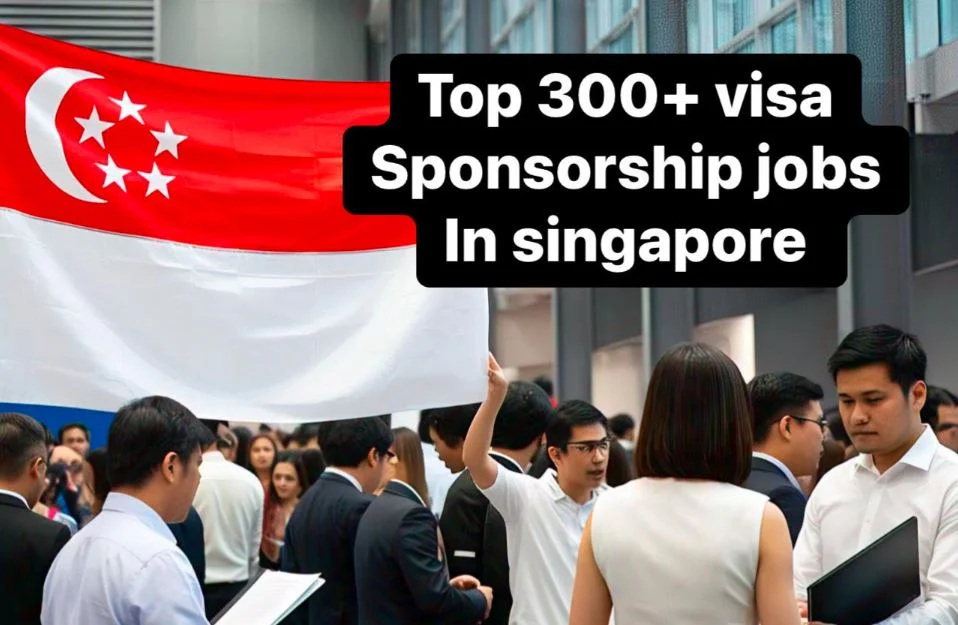
Singapore, with its world-class infrastructure, competitive salaries, and reputation as Asia’s leading business hub, has become a top destination for professionals seeking global career opportunities. From finance and technology to healthcare and engineering, the city-state continues to attract skilled talent from all over the world.
However, for most foreigners, landing a job in Singapore isn’t just about having the right qualifications—it starts with one critical requirement: securing a job that offers visa sponsorship. Without employer sponsorship, even the most qualified candidates may find it impossible to legally work in the country.
For many applicants, the process of finding and applying for Singapore visa sponsorship jobs can feel confusing and highly competitive, filled with unfamiliar visa categories, strict eligibility rules, and employer-specific requirements. But with the right strategy and a clear understanding of how the system works, this process becomes far more manageable.
In this guide, you’ll learn how to apply for Singapore visa sponsorship jobs step by step, including what employers look for, how sponsorship works, and how to position yourself as a strong candidate in one of the world’s most dynamic job markets.
Understanding Singapore Visa Sponsorship Jobs
Before applying for roles in Singapore, it’s important to understand what visa sponsorship actually means in the Singaporean job market. Unlike some countries where individuals can apply for work visas independently, Singapore operates a strict employer-driven system. This means that your ability to work legally in the country depends entirely on an employer willing to sponsor your work visa.
In simple terms, a Singapore visa sponsorship job is a role where the employer agrees to apply for a work pass on your behalf through Singapore’s Ministry of Manpower (MOM). The employer must justify why a foreign professional is needed for the position and ensure that the role meets salary, skill, and regulatory requirements set by the government.
Visa sponsorship in Singapore is closely tied to employment, not residency. Your legal right to stay in the country is linked directly to your job, which is why securing the right employer is such a critical step in the process.
Common Singapore Work Visas That Require Sponsorship
There are several types of work passes in Singapore, but the most common ones associated with sponsorship jobs include:
Employment Pass (EP) – Designed for foreign professionals, managers, and executives with strong qualifications and relevant work experience. This is the most sought-after visa for skilled workers and offers the greatest flexibility.
S Pass – Intended for mid-skilled workers in sectors such as manufacturing, construction, logistics, and services. This pass has stricter quota limits and levy requirements for employers.
Work Permit – Generally issued for semi-skilled or manual labor roles in approved industries. These permits are highly regulated and usually tied to specific sectors.
Understanding which work pass applies to your profile is essential. It helps you target the right jobs, avoid ineligible applications, and communicate more effectively with potential employers.
Eligibility Requirements for Singapore Visa Sponsorship Jobs
To successfully apply for Singapore visa sponsorship jobs, you must meet specific eligibility criteria set by the Singapore Ministry of Manpower (MOM). These requirements are designed to ensure that foreign professionals complement the local workforce and bring in-demand skills to the economy. Meeting these standards is non-negotiable, and understanding them early helps you focus only on realistic opportunities.
General Eligibility Criteria
While requirements vary depending on the type of work pass, most sponsored jobs in Singapore expect applicants to meet the following conditions:
A confirmed job offer from a Singapore employer
You cannot apply for a Singapore work visa on your own. A legitimate job offer from a registered Singapore company is mandatory, as the employer is responsible for submitting the work pass application.
Relevant educational qualifications
Most professional roles require a recognized degree, diploma, or professional certification related to the job. Employment Pass applicants are typically expected to hold a strong academic background from accredited institutions.
Relevant work experience
Singapore employers prioritize candidates with proven, practical experience. The more specialized and in-demand your skills are, the stronger your chances of being sponsored.
Minimum salary requirements
Each work pass has a minimum salary threshold that must be met. Salaries are evaluated based on your role, experience, and industry, and they must align with MOM standards.
Clean immigration and legal record
Applicants must meet health, character, and security requirements. Previous visa violations or criminal records can result in automatic rejection.
Skills and Industries in High Demand in Singapore
Targeting sectors with ongoing talent shortages significantly improves your chances of securing visa sponsorship. Singapore consistently seeks foreign professionals in areas such as:
Technology & IT (software engineers, cloud specialists, data analysts, cybersecurity professionals)
Finance & Banking (risk analysts, compliance officers, fintech specialists)
Engineering (electrical, mechanical, civil, and process engineers)
Healthcare (nurses, medical technologists, allied health professionals)
Logistics, Supply Chain & Manufacturing
Research, Science & Advanced Manufacturing
By aligning your qualifications with these high-demand industries, you position yourself as a solution to Singapore’s workforce needs rather than just another applicant.
Understanding and meeting these eligibility requirements sets a strong foundation for the next stage actually applying for Singapore visa sponsorship jobs with confidence and clarity.
Step-by-Step: How to Apply for Singapore Visa Sponsorship Jobs
Applying for Singapore visa sponsorship jobs requires a structured and deliberate approach. Singapore’s job market is highly competitive, and employers are selective about sponsoring foreign workers. Following a clear step-by-step process helps you avoid wasted applications and increases your chances of success.
1. Identify the Right Work Pass for Your Profile
Before applying, understand which Singapore work pass fits your qualifications and experience. Most professionals will fall under the Employment Pass (EP) or S Pass category. Knowing this helps you target roles that are legally eligible for sponsorship and prevents unnecessary rejections.
2. Research Employers That Sponsor Foreign Workers
Not all companies in Singapore are open to sponsoring visas. Focus on multinational corporations, established local firms, and companies with a history of hiring international talent. Job portals like MyCareersFuture, LinkedIn, and company career pages are reliable starting points.
3. Tailor Your CV to Singapore Standards
Singapore employers value concise, results-driven CVs. Keep your resume clear, professional, and relevant to the role. Highlight measurable achievements, technical skills, and experience that directly align with the job description. Avoid unnecessary personal details and long narratives.
4. Apply Strategically, Not Massively
Sending out hundreds of generic applications rarely works. Instead, apply selectively to roles that closely match your skill set and clearly mention visa eligibility or openness to foreign candidates. Quality applications consistently outperform quantity.
5. Prepare for Interviews With Sponsorship in Mind
If shortlisted, be ready to discuss your experience, technical skills, and how you add value to the company. Employers may also assess whether sponsoring your visa is justified, so clearly communicate your expertise and long-term career intentions.
6. Receive a Formal Job Offer
Once selected, the employer will issue a formal offer that meets MOM requirements. This offer forms the basis of your visa sponsorship and determines which work pass you qualify for.
7. Employer Submits the Work Pass Application
Your employer applies for your work pass through the Ministry of Manpower. At this stage, you may need to provide additional documents such as educational certificates, passport details, and employment history.
8. Wait for Approval and Finalize Relocation
Processing times vary, but once approved, you’ll receive an In-Principle Approval (IPA) letter. Only after this should you make travel and relocation plans.
Following this structured process keeps your application compliant, professional, and aligned with Singapore’s strict employment regulations.
Insider Tips to Increase Your Chances of Getting Singapore Visa Sponsorship Jobs
Many applicants technically qualify for Singapore visa sponsorship jobs but still struggle to secure offers. The difference often comes down to strategy, timing, and how well you understand what Singapore employers truly value. These insider tips can give you a competitive edge.
Target Employers With a Proven Sponsorship History
Companies that have sponsored foreign workers before are far more likely to do so again. Multinational corporations, tech firms, financial institutions, and large engineering companies are usually familiar with MOM requirements and visa procedures, making them safer targets.
Match Salary Expectations to Market Reality
Singapore has strict salary benchmarks for work passes. If your expected salary is too low or unrealistically high, employers may hesitate to proceed with sponsorship. Research average salaries in your field and align your expectations accordingly.
Emphasize Specialized and Transferable Skills
Employers are more willing to sponsor candidates who bring skills that are difficult to find locally. Highlight niche expertise, certifications, advanced tools, or international experience that clearly sets you apart from local applicants.
Be Transparent About Your Visa Needs
Avoid waiting until the final stages to mention sponsorship. Being upfront allows employers to assess feasibility early and avoids wasted time on both sides.
Strengthen Your Professional Online Presence
Recruiters in Singapore often review LinkedIn profiles before making hiring decisions. Keep your profile updated, keyword-optimized, and aligned with your CV. Show clear career progression and relevant achievements.
Demonstrate Long-Term Commitment
Employers prefer candidates who show interest in building a career in Singapore rather than viewing it as a short-term stop. Mention your interest in the local industry, work culture, and professional growth within the country.
Apply Early and Be Patient
Work pass approvals depend on quotas, documentation, and government processing times. Starting early gives you flexibility and reduces pressure if additional documents or clarifications are requested.
Using these strategies doesn’t guarantee sponsorship but it dramatically improves your odds by aligning your application with how Singapore employers and authorities actually make decisions.
Common Mistakes to Avoid When Applying for Singapore Visa Sponsorship Jobs
Even strong candidates can lose out on Singapore visa sponsorship jobs due to avoidable errors. Singapore’s immigration and employment system is strict, and small mistakes can lead to rejection, delays, or lost opportunities. Being aware of these common pitfalls can save you time and frustration.
Applying Without Confirming Sponsorship Eligibility
Many applicants apply to roles without checking whether the employer is open to hiring foreigners. If a job posting does not allow visa sponsorship, even a perfect profile will not move forward.
Ignoring Work Pass Requirements
Each Singapore work pass has specific salary, qualification, and experience thresholds. Applying for roles that do not meet these requirements often leads to automatic rejection, regardless of employer interest.
Submitting Generic or Poorly Structured CVs
A one-size-fits-all CV rarely works in Singapore’s competitive market. Generic resumes that lack measurable results, clarity, or relevance make it difficult for employers to justify sponsorship.
Providing Incomplete or Inaccurate Information
Discrepancies in employment history, qualifications, or personal details can raise red flags during background checks. Singapore authorities value accuracy and transparency, and inconsistencies can delay or derail applications.
Assuming Sponsorship Is Guaranteed
Even with a job offer, visa approval is not automatic. The Ministry of Manpower evaluates each application independently, and approval depends on compliance with current regulations and labor market conditions.
Underestimating Processing Time
Some applicants make travel or resignation plans before receiving official approval. Work pass processing can take weeks, and premature decisions can create unnecessary stress or financial loss.
Overlooking Cultural and Workplace Expectations
Employers assess not just skills but also cultural fit. A lack of understanding of Singapore’s professional environment, work ethic, or communication style can hurt your chances during interviews.
Avoiding these mistakes helps keep your application professional, compliant, and competitive, exactly what Singapore employers look for when considering visa sponsorship.
Conclusion: Turning Your Singapore Career Dream into Reality
Securing a Singapore visa sponsorship job may seem challenging at first, but with the right knowledge, preparation, and strategy, it is entirely achievable. Singapore continues to welcome skilled professionals who can contribute to its thriving economy, innovative industries, and dynamic workforce. The key is understanding how the system works and positioning yourself as a valuable, eligible candidate.
By identifying the correct work pass, targeting employers that sponsor visas, aligning your skills with high-demand roles, and avoiding common mistakes, you can significantly increase your chances of success. Visa sponsorship is not about shortcuts, it’s about readiness, credibility, and timing.
If Singapore is part of your long-term career vision, start taking deliberate steps today. Research the market, refine your CV, apply strategically, and stay informed throughout the process. With commitment and the right approach, your goal of living and working in Singapore can move from aspiration to reality.